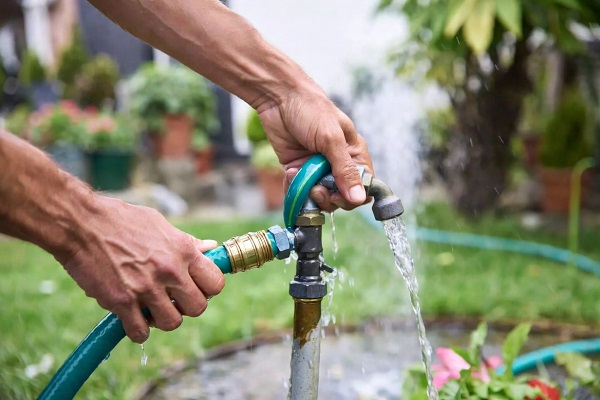
Best Garden Hose Timers: Mechanical vs Smart, Which You Need
The best garden hose timer is a basic mechanical dial if all you need is "shut off after a set time so I stop forgetting," and a smart WiFi-connected controller if you also want weather-aware scheduling, remote control while you're away, or multiple zones on independent schedules. Most buying guides skip straight to ranking smart models, which is the wrong first question for a lot of yards.
Here's how to figure out which type actually fits yours.
Basic mechanical timers: simple, no app, no subscription
A basic mechanical hose timer threads directly onto your outdoor spigot, and you set a dial for how many minutes of watering you want before it shuts the water off automatically. There's no app, no WiFi connection, and no account to set up, just a physical dial and a battery or fully mechanical (no battery at all) mechanism depending on the model.
This solves the single most common real problem: forgetting the hose is running and coming back an hour later to a flooded bed or a wasted water bill. For a single-zone yard where you just want a set-and-forget shutoff, this is genuinely all most people need, and it's the least expensive option by a wide margin.
Smart/WiFi timers: what "weather-skip" scheduling actually does
Smart hose timers connect to your home WiFi (often through a small hub) and let you control watering from a phone app, with the option to build out a recurring schedule rather than starting the timer manually each time.
The feature that actually differentiates these from a basic timer is weather-aware scheduling: the app checks a local forecast and automatically skips or shortens a watering cycle when rain is expected, rather than running your schedule blindly regardless of conditions. This avoids the classic problem of a fixed schedule watering a lawn the same morning a storm rolls through.
Some models also carry a WaterSense certification, an EPA program marking products that meet water-efficiency criteria, which is a reasonable credibility signal to look for if efficient watering matters to you specifically, separate from the smart features themselves.
Multi-zone timers: watering different areas on different schedules
If your yard genuinely has different watering needs in different areas (containers that need frequent light watering, a lawn that needs less frequent deep watering, a vegetable bed with its own schedule), a multi-zone timer splits one spigot's output into two or more lines, each with its own independent schedule.
This is a real, distinct benefit from either basic or single-zone smart timers, and it's the strongest reason to consider a smart controller over a basic one even if weather-skip scheduling alone wouldn't have tipped the decision. A single-zone yard with uniform watering needs doesn't gain much from this feature specifically, even if it upgrades to a smart timer for other reasons.
Do you actually need a smart timer?
Here's the section a site selling smart controllers won't lead with. If your yard is one zone, your schedule doesn't change much week to week, and you're not regularly traveling during the growing season, a basic mechanical timer solves the core problem (stopping forgotten watering) at a fraction of the cost and with nothing that can lose WiFi connection or need an app update.
Where a smart timer earns its keep is genuinely different circumstances: frequent travel where remote control matters, a climate with unpredictable rain where weather-skip meaningfully saves water, or multiple zones with different needs. If none of those describe your situation, the "smart" premium is buying convenience you may not actually use.
Setup basics: what installing one involves
Both types thread onto your existing outdoor spigot the same way a hose does, no plumber or electrician required for either. A basic mechanical timer is turn-the-dial-and-go. A smart timer typically involves downloading an app, connecting the unit to your home WiFi (sometimes through a small hub device), and building your first schedule, which takes some initial setup time but nothing beyond what setting up any other smart-home device requires.
If you're also deciding between a timer and a full drip or soaker system, our soaker hose vs drip irrigation guide covers that separate decision, since a timer can run either delivery method once it's chosen. And if you haven't settled on a hose itself yet, our how to choose a garden hose buying guide covers that first decision.
Battery life and reliability, the trade-off nobody mentions
Both timer types generally run on batteries (a mechanical timer's dial mechanism and a smart timer's WiFi radio both draw power), and this is worth planning for rather than discovering mid-season. A basic mechanical timer's battery, when it has one at all, typically lasts a full season or more since it's only powering a simple dial. A smart timer's battery tends to drain faster, since it's maintaining a WiFi connection and checking in with an app regularly, which means checking battery level through the app periodically rather than finding out the hard way when a scheduled watering silently doesn't happen.
This isn't a reason to avoid smart timers if the features genuinely fit your yard, it's simply a maintenance habit to build in alongside the setup, the same way you'd check batteries in a smoke detector on a schedule rather than waiting for it to fail.
A timer doesn't fix a hose or spigot problem underneath it
One thing worth knowing before installing any timer, smart or basic: a timer controls when water flows, not how well it flows. If your hose already has low pressure, a leak, or a kink, a timer on top of that setup just automates the same weak or leaking watering session on a schedule instead of fixing the actual problem. Our garden hose low water pressure guide is worth working through first if flow is already an issue, so the timer you install is scheduling a watering session that actually works well, rather than a schedule for a problem you haven't noticed yet because you're not standing there watching it happen.
FAQ
Do I need a smart hose timer, or is a basic one enough?
If you just want the water to shut off automatically after a set time, a basic mechanical timer is enough. Choose smart specifically for weather-aware scheduling, remote control, or multiple independently scheduled zones.
What does "weather-skip" scheduling actually do?
It checks a local weather forecast and automatically skips or shortens a scheduled watering cycle when rain is expected, so you're not watering right before or during a storm on a fixed schedule.
Do smart hose timers need a subscription?
This varies by model and isn't universal; check the specific product before buying if a recurring fee matters to your decision. Basic mechanical timers never require one.
What is WaterSense certification?
It's an EPA program that certifies products meeting water-efficiency criteria. It's a reasonable signal to look for if water efficiency matters to you, separate from whether a timer is smart or basic.
Can one hose timer handle multiple garden areas?
A single-zone timer runs one schedule for wherever the hose is pointed. If your areas need genuinely different schedules, a multi-zone timer (which splits one spigot into two or more independently scheduled lines) is the feature to look for specifically.
GardenLea publishes honest, practical home-and-garden guides. We don't sell watering controllers, so this is about matching the type to your actual yard, not upselling the smart option.