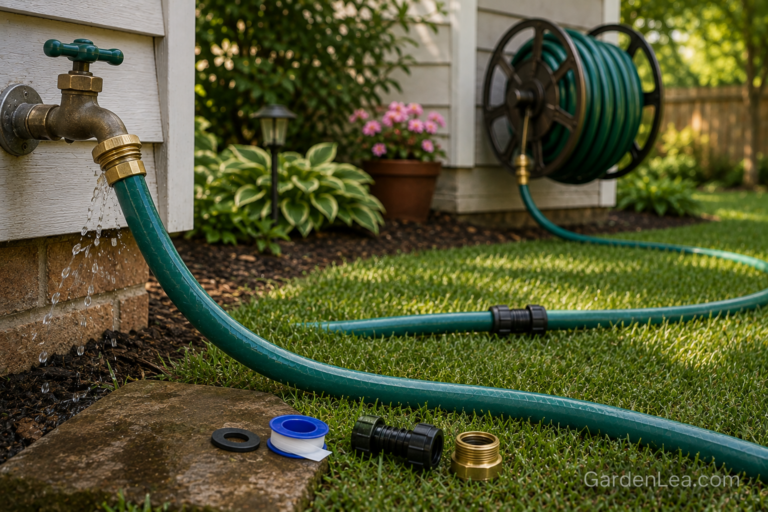
Garden Hose Smells Bad? Causes, Cleaning, and Fixes
The short answer: why hoses turn green or smell, and how to fix it
A garden hose turns green or starts to smell because water sits inside a warm, dark tube for hours or days between uses, and that combination, warmth, moisture, and time, is exactly what algae and organic buildup need to take hold. It happens fastest in a hose left coiled in direct sun with both ends closed. The fix follows the same order every time: flush the hose thoroughly, rinse the inside with a diluted household cleaner if buildup is stubborn, then drain and air-dry it completely before storing it out of direct sun. Do that once to clear the current problem, then stop the hose from sitting full of standing water again, and it typically doesn't come back.
This is a maintenance problem, not a plumbing emergency, and it isn't a verdict on whether the water inside is safe to drink. That question gets its own answer further down.
Why this happens: warmth, standing water, and organic buildup
A garden hose is a long, dark, closed tube, which is close to ideal conditions for algae growth once water and warmth are both present. Water left standing after the last use sits at whatever temperature the hose reaches in the sun, and a black or dark green hose left coiled on a patio can get significantly hotter inside than the air around it. Warm, still water loses oxygen and gives any algae spores or organic debris already in the hose time to establish rather than getting flushed straight through.
The organic matter has to come from somewhere. Every time the open end of a hose touches the ground, brushes through grass or mulch, or sits uncapped near a garden bed, it picks up dust, pollen, and trace plant matter. None of that is unusual for outdoor equipment, but if it sits in warm standing water instead of getting flushed out on the next use, it becomes the food source for the green tint on the inside walls and the buildup that produces a musty or sulfur-like smell at the fittings. A hose that's used briefly, drained, and coiled loosely in shade rarely develops this problem. One that stays connected to the spigot, closed off at a nozzle, and left in the sun for a week is the classic setup for it.
How to clean a hose that's already green or smells bad
Work in this order, and don't skip the drying step, it's the one most people leave out.
- Disconnect the hose from the spigot and any nozzle or sprayer attachment.
- Flush it at full pressure, running water through from the spigot end for a minute or two, then reversing direction if you can, to push loosened buildup out both ways rather than just packing it further down the hose.
- For buildup that doesn't flush out, a diluted rinse with white vinegar or a mild household cleaner can help loosen what plain water leaves behind. Follow the product's own label directions rather than guessing at strength or contact time, and be aware that repeated or overly strong cleaning solutions can dry out or degrade rubber and vinyl hose walls over time, so this is a periodic fix, not a weekly routine.
- Brush accessible fittings and washers at both ends with a small brush; buildup collects at the threads and gasket as much as inside the tube.
- Drain and air-dry completely before storing it. Stretch the hose out or hang it with both ends open so air moves through the full length, not just the low points, since a hose that goes back into storage still damp restarts the whole cycle.
| What you're seeing | Likely cause | What actually fixes it |
|---|---|---|
| Green tint along the inside walls | Algae growth in sun-warmed standing water | Full flush, diluted-cleaner rinse if needed, complete air-dry |
| Slimy texture right at the openings | Organic debris (dust, pollen, plant matter) collecting where the hose meets ground or fittings | Flush both directions, brush the fittings and washers |
| Musty or sulfur-like smell | Organic buildup breaking down inside standing water | Flush, dry fully, don't store it wet |
| Smell or tint returns within days of cleaning | Hose is going straight back into standing water or direct sun after cleaning | Fix the storage habit, not just the hose (see next section) |
Preventing it: drainage, storage, and coiling habits
Cleaning a hose that's already gone green treats the symptom. The habits below are what actually stop it from happening again.
- Drain it after every use, not just before winter storage. Disconnect the nozzle, let gravity pull the water out, and don't leave a hose full and capped between waterings.
- Don't leave it connected to a closed spigot for long stretches. A hose left attached with the tap technically off can still hold standing water in the section nearest the connection, right where fittings and washers already trap debris.
- Store it out of direct sun, even during the season, not only over winter. A shaded wall hook, a shed, or simply the inside of a garage keeps the hose from acting like a small greenhouse for algae between uses.
- Coil it loosely, not tightly. A loose coil dries more evenly than a tight one, where damp folds can stay wet against each other for days. The same habit that keeps a hose from developing stress kinks, covered in why your garden hose keeps kinking, also gives it a better chance to actually dry between uses.
If you're setting up a proper off-season storage routine rather than just a between-waterings habit, our winterizing and storage guide covers draining and coiling for the cold months specifically, which is the same underlying discipline applied to a longer stretch of time.
Materials that resist buildup more than others
Not every hose is equally prone to this. Standard vinyl, especially a dark-colored one, absorbs more heat in the sun than lighter materials, which speeds up exactly the warmth-driven growth described above. Rubber hoses are heavier and generally hold up better to repeated UV exposure, though they're not immune to the same standing-water problem if left full and capped. Polyurethane hoses tend to have a smoother interior wall than vinyl, which gives buildup less to grip onto, and they're commonly made in lighter colors that don't heat up as fast in direct sun.
None of this means a particular material is exempt from the basic habit: any hose left full of warm standing water for long enough will eventually show some buildup. Material just shifts how fast it happens and how easy the interior is to keep clean. If you're comparing vinyl, rubber, and polyurethane for a new hose rather than troubleshooting the one you already own, our garden hose material comparison breaks down the tradeoffs beyond just this one issue.
Wondering if it's safe to drink from? Here's where that's answered
This page is about cleaning and preventing buildup, not about whether hose water is safe to drink, and that's worth being direct about rather than guessing at an answer here. A standard garden hose was never intended as a drinking-water source in the first place, buildup or not, so a clean-looking hose isn't automatically a safe one to drink from any more than a green one is automatically dangerous.
If you, your kids, or a pet sometimes drink straight from the hose, or you use one to top off a water bowl or fill a container for edible plants, the honest approach is caution alongside the cleaning and drying habits above, not a guarantee either way. For the actual drinking-safety question, including what "lead-free" and "drinking water safe" labels do and don't cover, see our dedicated guide to drinking-water-safe garden hoses.
When to just replace the hose
Most green or smelly hoses respond to a thorough flush, a cleaning rinse, and a real dry-out. Replacement is a reasonable call when a hose keeps coming back to the same problem shortly after you've cleaned it properly, or when the hose is old enough that the interior has a rough, textured feel throughout its length rather than just at the fittings, a sign buildup has more surface to cling to than a smooth, newer hose would offer.
This is a hygiene and performance preference, not a safety mandate, an interior that's hard to clean is simply more work to keep in usable condition. If you're shopping for a replacement, our complete guide to choosing a garden hose walks through length, diameter, and material together, so you're not making that decision on material alone.
FAQ
Is it dangerous to touch or use a hose that has algae inside it?
This page doesn't make a health determination either way, since that depends on specifics this page can't know about your hose or your household. What it can say is that a green or smelly hose is a cleaning and maintenance issue to address, and the steps above clear it.
Will a quick rinse get rid of the green color, or do I need a stronger cleaner?
A thorough flush clears loose buildup, but if the green tint or smell is well established, a diluted vinegar or mild household cleaner rinse (following the product's own label) usually finishes the job better than water alone.
Can I use bleach to clean my hose?
Some cleaning guides suggest it, but bleach is caustic to metal fittings and can degrade rubber and vinyl over repeated use. If you use any household cleaning product on a hose, follow that product's own label instructions rather than mixing your own solution, and don't make it a routine step.
Why does my hose smell fine right after I clean it but the odor comes back within a week?
Almost always because it's going straight back into the same conditions that caused it: standing water, a closed end, and direct sun. Cleaning fixes the current buildup; changing the storage habit is what actually stops it recurring.
Does a shorter hose have less of this problem than a long one?
Length itself isn't the main factor, standing water and sun exposure are. A short hose left full and coiled in the sun can develop the same buildup as a long one; a long hose that's drained and shaded after every use usually won't.
GardenLea publishes honest, practical home-and-garden guides. We don't sell hoses or cleaning products, so this is about what actually clears buildup and keeps it from coming back, not a product pitch.