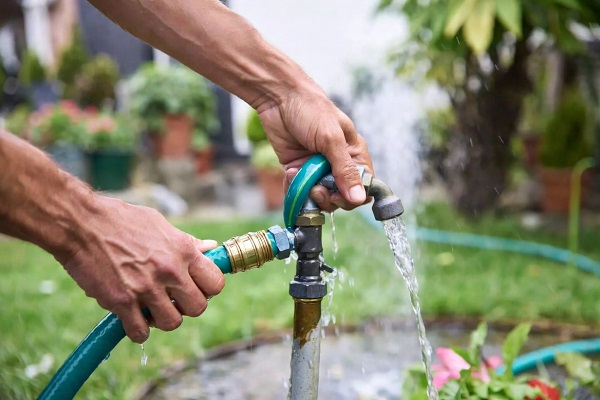
Garden Hose Water Pressure Too Low? Causes and Fixes
Weak water pressure from a garden hose usually comes down to one of five things: the spigot itself, a kink, a leak, a blockage inside the hose, or the hose's own length and diameter. Working through them in that order finds the cause fastest, because it separates a hose problem from a plumbing problem before you spend time troubleshooting the wrong end.
Step 1: check the water source without the hose attached
Before touching the hose at all, disconnect it and turn the spigot on by itself. If the water coming straight out of the spigot is already weak, the problem isn't your hose, it's the water supply or the spigot itself, and no amount of hose troubleshooting will fix that.
If the spigot delivers strong, full flow on its own, the cause is somewhere between the spigot and the nozzle, and the rest of this guide applies.
Step 2: check for kinks along the hose
A kink is the single most common cause of weak flow and the easiest to miss, because a hose can look fine coiled up and still have a sharp bend hidden in a loop. Walk the full length of the hose while water is running and look for any spot where it's pinched or folded rather than curved. Straightening a kink usually restores flow instantly. Our guide to why garden hoses keep kinking covers both the fix and how to store the hose so kinks stop recurring.
Step 3: check fittings and connections for leaks
A leak at either end, at the spigot connection or at the nozzle, lets water escape before it ever reaches where you're aiming it, which reads as weak pressure even though the total flow through the hose is fine. Run your hand along both connection points while the water is on and feel for dampness or spray. Our how to fix a leaky garden hose guide covers diagnosing exactly where a leak is coming from and the fix for each location.
Step 4: check for blockages or mineral buildup inside the hose
If the hose looks fine, has no kink, and no visible leak, the inside of the hose itself can still be partially blocked. Dirt or debris pulled in from a previous use, or mineral deposits from hard water, can narrow the passage enough to noticeably reduce flow over time even though nothing looks wrong from the outside.
To check, disconnect the hose fully from the spigot and look into the open end. Flushing the hose with the spigot on full (with the nozzle end pointed somewhere safe) for a minute or two often clears loose debris. Persistent mineral buildup is harder to flush out and may mean the hose has reached the end of its useful life if flow doesn't improve.
Step 5: consider hose length and diameter
If the spigot delivers strong pressure on its own and the hose is free of kinks, leaks, and blockages, the hose's own length and diameter may simply be reducing flow by the time water reaches the nozzle, especially on a long hose or a narrower diameter. This isn't a defect, it's a physical trade-off of moving water through more tubing. Our garden hose length guide covers how length and diameter interact, and whether a shorter or wider hose would solve the problem you're experiencing without any repair needed at all.
A note on connector and fitting leaks specifically
If step 3 turns up a leak right at a connector or end fitting rather than along the middle of the hose, that's a slightly different repair than a mid-hose puncture, usually a worn or missing washer inside the fitting, or a coupling that's simply not threaded on tightly enough. Hand-tightening a loose connection, or checking that the small rubber washer inside the female end hasn't fallen out or worn through, resolves most fitting-specific leaks without replacing the whole hose. If tightening and a washer check don't stop it, the fitting itself may need replacing rather than the hose.
When it's a household plumbing issue, not a hose issue
If step 1 showed weak flow straight from the spigot with nothing attached, the fix isn't anything to do with the hose. That points to something upstream, low household water pressure generally, a partially closed shutoff valve somewhere in the line, or an aging spigot itself. That's a plumbing question, not a garden hose one, and worth a plumber's attention rather than continuing to troubleshoot the hose.
Two things are worth ruling out yourself before calling anyone, though, since they're both quick checks. First, make sure the main house shutoff valve (often in a basement, utility closet, or near where the water line enters the home) is fully open, since a valve left partially closed after other plumbing work is a surprisingly common, easy-to-fix cause of weak pressure throughout a home, not just at one outdoor spigot. Second, check whether other fixtures in the house are also running weak; if only the one outdoor spigot is affected while indoor faucets run fine, the issue is more likely local to that specific spigot or its connection than a whole-house pressure problem, which changes what a plumber needs to look at first.
A quick pre-check before you start the full sequence
If you're short on time, two checks catch a large share of cases before you need to work through every step above: confirm the nozzle isn't itself the bottleneck by removing it and checking flow straight from the open hose end, and confirm nothing is standing on or crimping the hose somewhere out of sight, like a planter, a step, or a garden cart wheel resting on a section of it. Both are common, easy-to-miss causes that masquerade as a deeper hose or pressure problem when the actual fix takes seconds.
FAQ
What's the most common cause of low garden hose pressure?
A kink is the single most common cause and the easiest to fix, followed by a leak at one of the fittings.
How do I know if the problem is my hose or my water supply?
Disconnect the hose and check the spigot's flow on its own. Weak flow with nothing attached points to the water supply; strong flow at the spigot but weak flow through the hose points to the hose itself.
Can a hose that's too long actually cause low pressure?
Yes. Longer hoses, especially narrower-diameter ones, reduce flow simply due to the extra length of tubing water travels through, which is a physical trade-off rather than a fault in the hose.
Will flushing my hose actually fix mineral buildup?
Flushing clears loose debris well. Mineral scale that's built up over a long time is harder to remove this way and may mean the hose needs replacing if flow doesn't improve.
Should I try to fix low spigot pressure myself?
A partially closed shutoff valve is sometimes a simple fix, but persistently weak household water pressure is a plumbing issue best handled by a plumber rather than something to diagnose through the hose alone.
GardenLea publishes honest, practical home-and-garden guides. We don't sell hoses or plumbing fixtures, so this is about diagnosing your actual setup, not selling a fix you don't need.