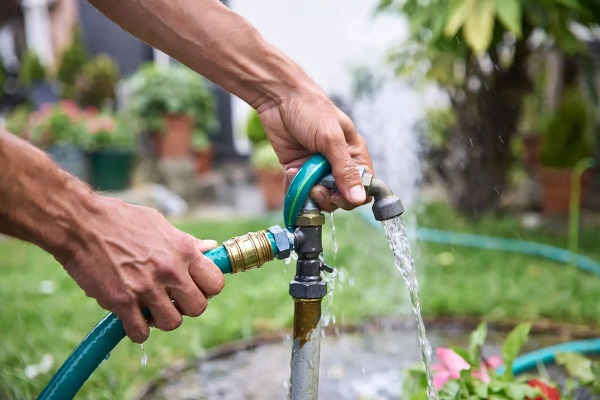
Are Expandable Garden Hoses Worth It? An Honest Verdict
Short answer: for some yards, yes, as your only hose, usually no. An expandable garden hose is worth it if you have a balcony, patio, small yard, or you simply can't wrestle a heavy rubber hose anymore. It's light, it coils into a shoebox, and it resists the kinks that make traditional hoses miserable. It is not worth it as the one hose for a large property, for dragging across rough concrete and gravel, or for anyone who leaves a hose out in the sun year-round. Treated as a light-duty convenience tool rather than a do-everything workhorse, it earns its place. Bought expecting a decade of abuse, it will disappoint you, often within a season or two.
At GardenLea we don't make or sell hoses, so we have no reason to talk you into one. This is a straight verdict, built from independent long-term testing published by others and the failure patterns owners report again and again.
How expandable hoses work (and why the design is fragile)
An expandable hose is two layers doing two jobs. Inside is a stretchy latex (or TPE) tube that balloons when water pressure fills it, expanding to roughly three times its resting length. Around it sits a woven fabric sleeve that limits how far the inner tube can stretch and shields it from scrapes. Turn the water off, the pressure drops, the latex snaps back, and the whole thing shrinks to a fraction of its working length. That's the magic: a hose that's 50 feet when you need it and coils tiny when you don't.
The catch is baked into that same mechanism. A thin latex tube that stretches and relaxes hundreds of times is, by design, a wear part. Traditional rubber and vinyl hoses hold a fixed shape under a much thicker wall; expandables trade that durability for weight and packability. Understanding this trade-off is the whole decision, you are choosing convenience knowing the material works harder and ages faster.
Who expandable hoses are genuinely great for
The SERP argues about whether they're "good" as if there's one answer. There isn't. It depends entirely on how and where you'll use it. Here's the honest split.
| Your situation | Verdict | Why |
|---|---|---|
| Balcony, patio, or container garden | Worth it | Light, coils tiny, easy to store indoors, the design's home turf |
| Small yard, light weekly watering | Worth it | Handles the load; kink resistance is a real daily win |
| Mobility-limited or older gardener | Worth it | A fraction of the weight of rubber; the single strongest reason to buy |
| Occasional use, stored indoors | Worth it | Low duty cycle plus shade equals a long, happy life |
| Large yard as your only hose | Skip it | Length and reach strain the material; you'll be replacing it |
| Dragged over concrete, gravel, or brick | Skip it | Abrasion shreds the fabric sleeve and exposes the core |
| Left outside in sun and freeze year-round | Skip it | UV and cold are the fastest killers of latex |
| High-pressure supply or pressure washing | Skip it | Pressure spikes are the number-one cause of bursts |
If most of your rows land in the top half, an expandable hose is a smart buy. If they land in the bottom half, no amount of "premium" marketing will fix the mismatch, you want a traditional rubber hose. If you're between the two, an expandable makes a great second hose for the deck while a rubber hose does the heavy work.
Why expandable hoses fail: 4 failure modes, and which you can prevent
This is the section brand blogs skip, because most of the failures point back at the product. But being honest about which failures are your fault versus the design's is what actually helps you decide. Two of these you can largely prevent; two are inherent to the category.
1. Pressure-burst of the inner tube (mostly preventable). The classic expandable-hose death. You attach a nozzle, water the garden, then set the hose down with the nozzle closed and the spigot still on. Pressure has nowhere to go, it climbs, and the thin latex core splits. This is the most common burst owners report, and it's almost entirely avoidable by shutting the water off at the tap when you pause. It's less a defect than a design that punishes a habit rubber hoses forgive.
2. Fitting and connector leaks (partly preventable). The inner tube and fabric sleeve are clamped to the end fittings, and that junction is the second-most-common failure point. Cheap plastic collars crack; even decent ones can weep where the layers meet the coupling. You can't fully prevent this, but choosing a model with solid brass fittings and not yanking the hose by its connectors buys you time.
3. UV and weather brittleness (inherent, slowable). Latex hates sunlight and hates freezing. Leave an expandable coiled on the lawn all summer and the core goes brittle; leave water in it over a hard frost and the ice can rupture it. Storing it shaded and drained slows this dramatically, but the material's sensitivity is inherent, a rubber hose simply tolerates neglect better.
4. Abrasion of the fabric sleeve (inherent to how you use it). Every drag across a rough patio wears the woven jacket. Once the sleeve frays and the inner tube is exposed, a burst is close behind. On grass this is slow; on concrete or gravel it's fast. Route matters more than most buyers expect.
The pattern: the failures you control (pressure and storage) are the ones that actually kill most hoses, and the failures that are truly inherent (material sensitivity, abrasion) can be slowed with a little care. That's genuinely good news for a light-duty user, and genuinely bad news for anyone who wants a hose they never have to think about.
If your current hose already leaks at the fittings or splits along its length, our guide on how to fix a leaky garden hose walks through which leaks are worth repairing and which mean it's time to replace.
Expandable vs traditional: lifespan and cost per season
Here's where honesty matters most, because the price tag is only half the math.
A mid-range expandable hose in regular weekly use typically lasts one to three seasons before pinhole leaks or a burst finish it. Premium builds, thicker fabric, solid brass ends, can stretch that to several seasons with careful use. Independent long-term testing (notably by Homes & Gardens, which ran expandables over months of real watering) reached a blunt conclusion: most are not worth it for heavy or sole use, precisely because they don't hold up the way a good rubber hose does. A quality rubber or reinforced hose, by contrast, routinely lasts a decade or more.
So the real comparison isn't the sticker. It's cost per season of reliable service. An expandable that needs replacing every two seasons can quietly cost more over ten years than one good rubber hose you buy once, even though each expandable feels cheaper at checkout. Buy the expandable for what it is (a light, packable convenience tool), not as a budget substitute for a hose that outlives it. When you're comparing the two, remember expandables also flow less water at a given diameter under load; our garden hose size guide explains how diameter affects flow so you don't under-size your watering.
We're describing tiers here, not quoting prices, hose prices move constantly and vary by retailer, so treat "budget / mid-range / premium" as the useful axis, and judge a model by its fabric weave and fittings rather than its number.
If you buy one: 6 rules that actually make it last
Most expandable hoses die of preventable causes. These six habits meaningfully extend the life of any model, and directly counter the failure modes above.
- Never leave it pressurized. Shut the water off at the tap whenever you set the hose down, especially with a closed nozzle. This single habit prevents the most common burst.
- Drain it after every use. Let it contract fully and empty before storing. Standing water invites fitting leaks and freeze damage.
- Store it shaded. Sunlight is latex's enemy. A hanger in the shade, a garage hook, or a storage bag beats a coil baked on the patio.
- Keep it off rough surfaces. Don't drag it across concrete, gravel, or brick. Lift it over abrasive ground; route it across grass where you can.
- Bring it in for winter. Drain fully and store indoors before the first hard freeze. Ice is a hose-splitter.
- Don't over-stretch or yank the fittings. Pull from the body, not the connectors, and don't stretch it taut to reach that last foot, it stresses both the core and the couplings.
Because expandables are so often marketed as the cure for tangles, it's worth knowing what actually causes them: our guide on why your garden hose keeps kinking covers the fixes that work on any hose, expandable or not.
If you skip it: lighter-duty without the fragility
Not sold? Reasonable. If your issue is weight or kinking rather than storage space, a lightweight reinforced hybrid-polymer hose gives you much of the low-weight, kink-resistant feel with a sturdier build and no expanding latex core to burst. If it's purely storage, a hose reel with a standard rubber hose solves the coil problem without the durability compromise. And for tight balcony watering where reach is short, a good watering can still beats any hose. The point isn't that expandables are bad, it's that "light and packable" and "tough and long-lived" are different goals, and you should buy for the one you actually need.
FAQ
Can you leave an expandable hose outside over winter?
You shouldn't. Drain it completely and store it indoors before the first hard freeze. Water left inside can freeze, expand, and rupture the latex core, and prolonged cold makes the material brittle. Winter storage indoors is one of the biggest factors in how many seasons an expandable survives.
Is it bad to leave an expandable hose pressurized?
Yes, it's the single most damaging habit. When the hose sits full with the water on and the nozzle closed, pressure builds against the thin inner tube and can burst it. Always shut the water off at the tap when you set the hose down, even for a few minutes.
Can you repair an expandable garden hose?
Sometimes. A leak or crack near an end fitting can occasionally be re-clamped or the fitting replaced. But a burst or pinhole in the inner latex tube along the hose body is usually not worth repairing, the fabric sleeve makes access hard and the material tends to fail again nearby. For most mid-life bursts, replacement is the honest call.
How long do expandable garden hoses actually last?
With regular weekly use, a mid-range model commonly lasts one to three seasons; premium builds with thicker fabric and brass fittings can reach several seasons. Light, occasional use with proper draining and shaded storage extends that further. A good traditional rubber hose, by comparison, often lasts ten years or more.
Do expandable hoses have good water pressure and flow?
They deliver usable pressure for everyday watering, but at a given diameter they tend to flow less than a rigid hose under load because the tube's stretch absorbs some force. For light watering that's fine; for sprinklers or filling large containers quickly, a traditional hose of the right diameter moves water faster.