Brass vs Plastic Garden Hose Fittings: Which Lasts Longer?
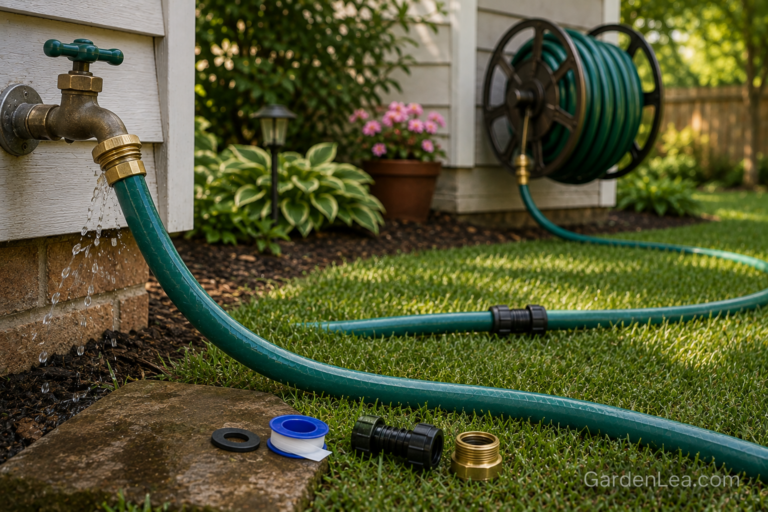
Brass fittings last considerably longer than plastic ones. Brass resists cracking, corrosion, and the wear of repeated attaching and detaching far better, and it holds up across seasons of temperature swings in a way plastic doesn't. Plastic fittings are lighter and cost less, and for light, occasional use in a mild climate, that's a perfectly reasonable trade-off. The extra cost of brass pays off specifically if you use your hose often, live somewhere with cold winters, or connect and disconnect attachments regularly, where plastic wears out fastest.
Why brass lasts longer: the material properties that matter
Brass is a metal alloy, and its relevant properties here are straightforward: it doesn't crack under impact or cold the way plastic can, it resists corrosion from water exposure over years, and its threads hold their shape through repeated attach-and-detach cycles better than molded plastic threads do. None of this means brass is indestructible, a badly cross-threaded brass fitting can still be damaged, but under normal use and normal wear, brass simply degrades more slowly than plastic.
Where plastic falls short: cracking, cold weather, thread wear
Plastic fittings fail in a few predictable ways:
- Cracking under impact or pressure. A plastic fitting dropped on concrete, or over-tightened with a wrench instead of hand-tightened, is more likely to crack than an equivalent brass one.
- Brittleness in cold weather. Plastic that's flexible in summer heat can become stiff and crack-prone in freezing temperatures, which matters if a hose or fitting is ever exposed to a hard freeze, intentionally or by accident.
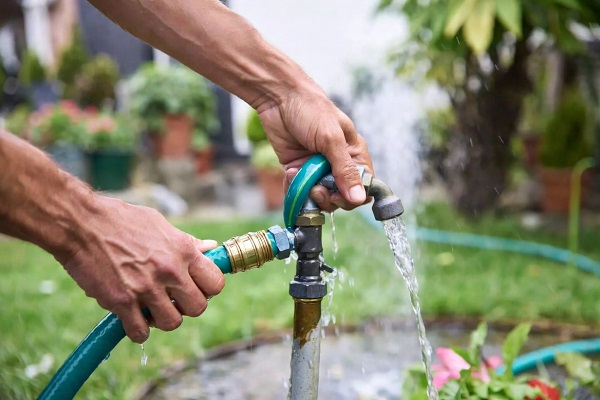
- Thread wear from repeated cycles. Every time you thread and unthread a plastic fitting, you wear down the same set of plastic threads. Over a season of frequent attaching and detaching (nozzles, sprinklers, adapters), those threads can strip or stop sealing tightly, which is one of the more common causes of a leak at the connection covered in our leaky garden hose guide.
Aluminum: the less common middle option
A smaller number of fittings use aluminum instead of brass or plastic. Aluminum is lighter than brass while still offering better durability than plastic, sitting between the two on both cost and longevity. It's a reasonable middle ground if weight is a real concern (moving a hose frequently, for example) and you want more durability than plastic without the added weight and cost of brass, though it's a less common option than the other two materials and worth checking is genuinely present rather than assuming, since some products marketed loosely as "metal" fittings are actually a thin metal coating over plastic.
The three materials, side by side
| Material | Cracking/corrosion resistance | Weight | Cold-weather brittleness | Relative cost |
|---|---|---|---|---|
| Plastic | Lowest, most prone to cracking under impact or overtightening | Lightest | Highest, becomes brittle in freezing temps | Lowest |
| Aluminum | Moderate, better than plastic, generally not as corrosion-resistant as brass long-term | Light-moderate | Lower than plastic, still stiffens in cold | Moderate |
| Brass | Highest, resists cracking, corrosion, and thread wear | Heaviest | Lowest, stays workable across temperature swings | Highest |
How to tell what material your current fittings are
If you're not sure what's already on your hose, a few quick checks help. Brass has a distinct yellow-gold color and is noticeably heavier for its size than plastic or aluminum, a magnet won't stick to it. Plastic is unmistakably lighter and often has visible mold seams from manufacturing. Aluminum sits in between on weight and typically has a duller, silvery-grey finish rather than brass's warm gold tone; like brass, a magnet won't stick to genuine aluminum either. If a fitting is marketed as "metal" but feels unusually light for its size, it may be a thin metal plating over a plastic core rather than solid metal, worth checking before assuming it has brass-level durability.
When plastic is genuinely the right choice
This is the section most brass-selling sites skip. Plastic fittings are a sensible choice, not just a cheap compromise, when:
- You use your hose lightly and occasionally, a few times a week during a mild season, rather than daily.
- You live somewhere without hard freezes, removing the cold-brittleness failure mode entirely.
- You don't disconnect and reconnect attachments often, reducing the thread-wear failure mode that hits plastic hardest.
- Budget genuinely matters more than longevity for this particular hose or attachment.
If none of those describe your situation, if you use your hose daily, live somewhere with real winters, or swap attachments often, brass is the fitting material worth spending more on.
Fittings that matter most
Not every fitting on a hose setup carries equal stakes. The connection at the spigot and at the hose's own coupling see the most repeated stress (they're threaded and unthreaded most often), so material quality matters most there. A nozzle's own internal fitting matters less if it's rarely removed. And if you're adding a quick-connect system to reduce how often any connection gets threaded by hand, the same brass-vs-plastic logic applies to the quick-connect adapter's body, brass resists the wear of repeated push-and-click cycles better, though the internal rubber seal (not the body material) is what actually determines whether it leaks.
If you're working through the hose-buying decision from the start rather than just the fittings, our complete garden hose buying guide covers diameter, length, and material together, fittings are one piece of that larger decision.
FAQ
Do brass fittings really last decades longer than plastic?
Under normal use, brass fittings commonly outlast plastic ones by a wide margin, resisting cracking, corrosion, and thread wear that plastic succumbs to much sooner. Exact lifespan depends heavily on climate and how often the fitting is used.
Is it worth paying more for brass fittings on a hose I barely use?
Probably not. If you use a hose lightly, in a mild climate, and rarely swap attachments, plastic fittings are a reasonable choice and the extra cost of brass may not pay off in your situation.
Why did my plastic fitting crack?
Most commonly from over-tightening (use hand-tightening, not a wrench), being dropped, or cold-weather brittleness if the fitting was exposed to a hard freeze while still connected.
Is aluminum better than brass for hose fittings?
Aluminum is lighter than brass and more durable than plastic, but it's a less common option and generally doesn't match brass's overall corrosion resistance and longevity. It's a reasonable middle choice if weight matters more to you than maximum durability.
Can I mix brass and plastic fittings on the same hose setup?
Yes, there's no compatibility issue between the materials themselves at a standard threaded connection. It's common to have a brass fitting at the spigot end and a plastic one at a rarely-used attachment, matched to how much stress each connection actually sees.
GardenLea publishes honest, practical home-and-garden guides. We don't sell fittings, so this comparison is about which material fits how you actually use your hose.